


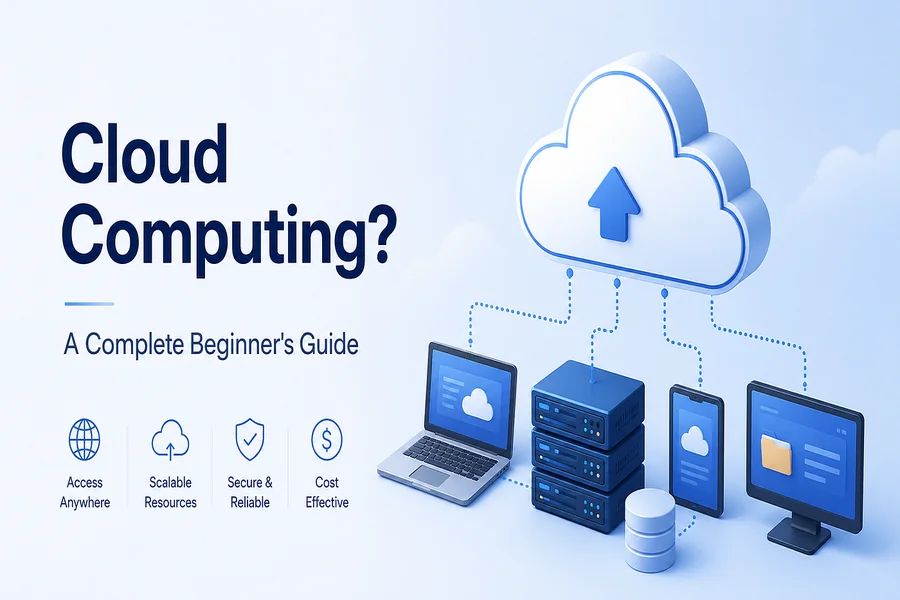
Introduction to Cloud Computing Cloud Computing Quikconsole Com
Cloud Computing Cloud Computing Quikconsole Com is a useful topic for understanding how modern computing services work over the internet. Cloud computing has changed the way individuals and organizations store data. It has also changed how businesses run applications and manage digital resources.
In the past many organizations needed to purchase physical servers and maintain them inside offices or dedicated data centers. This required hardware space electricity maintenance and technical staff. Cloud computing provides another approach by allowing users to access computing resources through internet-based services.
Cloud services can include storage databases virtual machines networking software development tools analytics and many other resources. Users can often access these resources without owning all the physical infrastructure behind them.
Cloud computing is now used in many areas. Businesses use it for websites applications data storage backups collaboration and business operations. Students use cloud-based applications for learning and file sharing. Individuals use cloud storage to keep photos documents and other files available across devices.
One of the major advantages of cloud computing is flexibility. Resources can often be increased or reduced according to changing requirements. This can be useful for organizations that experience changes in traffic or workload.
Cloud computing can also reduce the need for large upfront hardware investments. Instead of purchasing every server in advance a business can use cloud resources based on its requirements and the services offered by the provider.
However cloud computing also introduces responsibilities. Security privacy cost management performance and provider reliability should all be considered.
Understanding the basic concepts of cloud computing can help users make better technology decisions. It also makes it easier to understand why cloud services have become such an important part of the digital world.
What Is Cloud Computing and How Does It Work?
Cloud computing is the delivery of computing resources through a network. Most cloud services are accessed through the internet. Users can access resources without managing all the physical hardware themselves.
The infrastructure behind cloud computing usually includes servers storage systems networking equipment security technologies and software platforms. These resources are managed inside data centers operated by cloud service providers.
When a user requests a cloud service the provider allocates the necessary resources. For example a business may create a virtual server to run an application. Another user may simply upload files to a cloud storage service.
Virtualization is an important technology in many cloud environments. It allows physical hardware resources to be divided into multiple virtual environments.
Cloud platforms can also use automation. Resources can be created configured monitored and removed through software tools.
A simple cloud workflow may look like this:
- A user selects a cloud service.
- The user creates an account or accesses an existing account.
- Required resources are configured.
- The cloud provider supplies the requested computing capacity.
- The user accesses the service through the internet or a supported network.
- Usage can be monitored and adjusted as needed.
The user does not always need to know where the physical servers are located. The provider handles much of the underlying infrastructure.
This separation between physical infrastructure and user services is one of the key ideas behind cloud computing.
Main Types of Cloud Computing
Cloud computing can be classified in several ways. Understanding these categories helps users identify the right model for different requirements.
Public Cloud
A public cloud provides computing resources through a provider’s shared infrastructure. Customers use resources through their own accounts while the provider manages the underlying environment.
Public cloud services are commonly used by businesses of different sizes because they can provide flexible access to computing resources.
Private Cloud
A private cloud is designed for use by one organization. It may be operated by the organization itself or managed by an external provider.
Private cloud environments can provide greater control over infrastructure and configuration. They may be useful when organizations have specific security or compliance requirements.
Hybrid Cloud
Hybrid cloud combines private and public cloud environments. Organizations can keep some workloads in a private environment while using public cloud resources for other activities.
This approach can provide flexibility but it may require more complex management.
Infrastructure as a Service
Infrastructure as a Service or IaaS provides resources such as virtual machines storage and networking.
Users have greater control over the computing environment but are generally responsible for managing the operating systems and applications.
Platform as a Service
Platform as a Service or PaaS provides an environment for application development and deployment. Developers can focus on building applications without managing every part of the underlying infrastructure.
Software as a Service
Software as a Service or SaaS provides software through the internet. Users usually access the application through a web browser or dedicated application.
Email productivity software customer management systems and online collaboration tools are common examples of SaaS.
Each model provides a different balance between control and convenience.
Benefits and Important Features of Cloud Computing
Cloud computing offers several benefits that have made it popular among businesses and individual users.
Scalability
Cloud resources can often be increased when demand rises. They can also be reduced when demand falls.
This flexibility is useful for websites and applications that experience changing traffic levels.
Cost Flexibility
Traditional infrastructure often requires large upfront investments. Cloud computing can allow organizations to pay for resources based on their usage or selected service plans.
The exact pricing model varies between providers and services.
Accessibility
Cloud services can often be accessed from different locations. This supports remote work and collaboration when suitable internet access is available.
Backup and Recovery
Cloud environments can support backup and disaster recovery strategies. Data can be stored in separate locations to reduce the impact of certain hardware failures or other incidents.
Collaboration
Cloud-based tools allow multiple users to access shared files and applications. This can make teamwork easier for distributed teams.
Automation
Cloud platforms often provide automation tools. These can help organizations deploy applications manage resources and perform routine operations.
Global Availability
Large cloud providers operate infrastructure across multiple geographic regions. This can help organizations deploy services closer to users when the required services are available in those locations.
Speed
Cloud resources can often be created faster than traditional physical infrastructure. A development team may be able to create a new computing environment within minutes rather than waiting for hardware procurement.
These features can make cloud computing useful for both small projects and large digital operations.
Cloud Computing Comparison Table
Different cloud models serve different purposes. The following table provides a simple comparison.
| Cloud Model | Main Purpose | User Control | Common Use |
| Public Cloud | Shared cloud services | Moderate | Websites and applications |
| Private Cloud | Dedicated environment | High | Controlled business workloads |
| Hybrid Cloud | Combined environments | High | Flexible enterprise systems |
| IaaS | Computing infrastructure | High | Servers and virtual machines |
| PaaS | Application development | Medium | Software development |
| SaaS | Ready-to-use software | Low | Business and productivity apps |
The table shows that cloud computing is not one single technology. It is a broad collection of services and deployment models.
An organization that wants full control over virtual machines may consider IaaS. A development team that wants to focus on application code may prefer PaaS. A company looking for ready-to-use software may select SaaS.
Deployment models also affect management responsibilities. Public cloud environments may reduce infrastructure management while private environments can provide greater control.
The right model depends on technical requirements budget security needs and available expertise.
Cloud Computing Security and Common Challenges
Security is one of the most important considerations when using cloud computing.
Cloud providers generally implement security measures at the infrastructure level. However customers still have responsibilities for their accounts data applications and configurations.
Strong passwords should be used for cloud accounts. Multi-factor authentication can add another layer of protection.
Access permissions should also be carefully managed. Users should receive only the access they need for their responsibilities.
Data encryption can protect information during storage and transmission when properly implemented.
Regular backups are also important. Cloud services can improve availability but they should not automatically be treated as a complete backup strategy.
Misconfiguration is another common cloud security risk. An incorrectly configured storage system or access policy can expose information.
Cost management can also be challenging. Cloud resources may continue running when they are no longer needed. Organizations should monitor usage and remove unnecessary resources.
Vendor dependence is another consideration. Moving applications and data from one provider to another can sometimes require significant effort.
Internet connectivity can also affect cloud services. If users have poor network access they may experience difficulties accessing cloud-based applications.
Compliance requirements should be considered when handling sensitive information. Organizations may need to understand where data is stored and how it is processed.
Cloud computing can provide strong security capabilities but users should still manage their own responsibilities carefully.
How to Choose and Use Cloud Services
Choosing a cloud service should begin with a clear understanding of the problem that needs to be solved.
Start by identifying the workload. Determine whether you need file storage application hosting databases development tools analytics or another service.
Next consider the amount of computing resources required. Estimate storage capacity processing requirements network traffic and expected growth.
Security should be considered early rather than after implementation. Identify the types of information that will be stored and determine which access controls are required.
Compare service availability as well. If an application is important to customers then downtime can have a significant impact.
Pricing should be reviewed carefully. Cloud pricing can depend on storage requests processing time network traffic and other factors.
A small test environment can be useful before moving a major workload. Testing allows users to understand performance configuration requirements and potential costs.
Automation can also improve cloud management. Infrastructure as code and deployment tools can help create consistent environments.
Monitoring is essential after deployment. Track resource usage performance security events and costs.
Regular reviews can identify unused resources and opportunities to improve efficiency.
Organizations should also create a clear responsibility model. Teams should know who manages accounts security applications backups and infrastructure.
Cloud computing works best when it is treated as part of an overall technology strategy rather than simply moving existing systems online.
FAQs About Cloud Computing Cloud Computing Quikconsole Com
What is Cloud Computing Cloud Computing Quikconsole Com?
Cloud Computing Cloud Computing Quikconsole Com is a topic focused on cloud computing concepts including cloud services deployment models benefits security and practical uses.
What is cloud computing in simple terms?
Cloud computing means using computing resources such as storage servers software and databases through a network instead of managing all physical infrastructure directly.
Why do businesses use cloud computing?
Businesses use cloud computing for flexibility scalability remote access application hosting data storage backups collaboration and other technology needs.
What are the three main cloud service models?
The three commonly discussed service models are Infrastructure as a Service Platform as a Service and Software as a Service.
What is IaaS?
IaaS provides infrastructure resources such as virtual machines storage and networking. Users generally have significant control over the computing environment.
What is PaaS?
PaaS provides an environment for developing and deploying applications. It allows developers to focus more on software development without managing every infrastructure component.
What is SaaS?
SaaS provides software through the internet. Users generally access the application without managing the underlying servers or operating system.
Is cloud computing secure?
Cloud computing can provide strong security capabilities but security also depends on proper configuration and user practices. Account protection access controls encryption and monitoring are important.
Can cloud computing reduce costs?
It can reduce certain infrastructure expenses by reducing the need for upfront hardware purchases. However cloud costs must still be monitored because usage can increase expenses.
What is a public cloud?
A public cloud provides services through infrastructure operated by a cloud provider. Customers access resources through their own accounts.
What is a private cloud?
A private cloud is designed for one organization. It can provide greater control over the computing environment.
What is hybrid cloud?
Hybrid cloud combines private and public cloud environments. It can allow organizations to use different environments for different workloads.
Can cloud services be used for backups?
Yes. Cloud storage and other cloud services can support backup strategies. Organizations should still design and test their backup and recovery processes carefully.
What are common cloud computing challenges?
Common challenges include security configuration cost management provider dependence network connectivity compliance and workload migration.
Is cloud computing useful for small businesses?
Cloud computing can be useful for small businesses because it can provide access to computing resources without requiring the business to maintain all physical infrastructure itself.
Can cloud computing support remote work?
Yes. Many cloud-based applications allow users to access files software and collaboration tools from different locations when appropriate access and connectivity are available.
Final Thought
Cloud Computing Cloud Computing Quikconsole Com provides a useful framework for understanding one of the most important parts of modern technology. Cloud computing allows users to access storage computing power software development environments and many other services through network-based infrastructure.
The technology offers flexibility and can help organizations respond to changing requirements. Public private and hybrid cloud models provide different levels of control and management.
Service models such as IaaS PaaS and SaaS also give users different ways to consume computing resources. Choosing between them depends on the organization’s goals technical requirements and available expertise.
Security should always remain a central consideration. Strong authentication careful permissions monitoring encryption and reliable backups can help protect cloud environments.
Cloud computing is not automatically the right solution for every workload. Organizations should consider cost performance security compliance and long-term management before making decisions.
When planned carefully cloud computing can provide a flexible foundation for applications data storage collaboration and digital services. Understanding the technology is the first step toward using cloud resources effectively.
